wdwad
dadaw
Improvisation on the cello is a very natural thing. You don’t need to know exactly where the music is going before you begin.
Start with one note. Then another. Listen. Respond. Create.
Where my journey as an improvising cellist began.
LISTEN · LEARN · BE INSPIRED.
by san
dadaw
by john
sdsa
by Sarah M.
A calm exploration of melody and space, inspired by a quiet evening.

by Daniel K.
An improvised piece blending classical and blues influences.
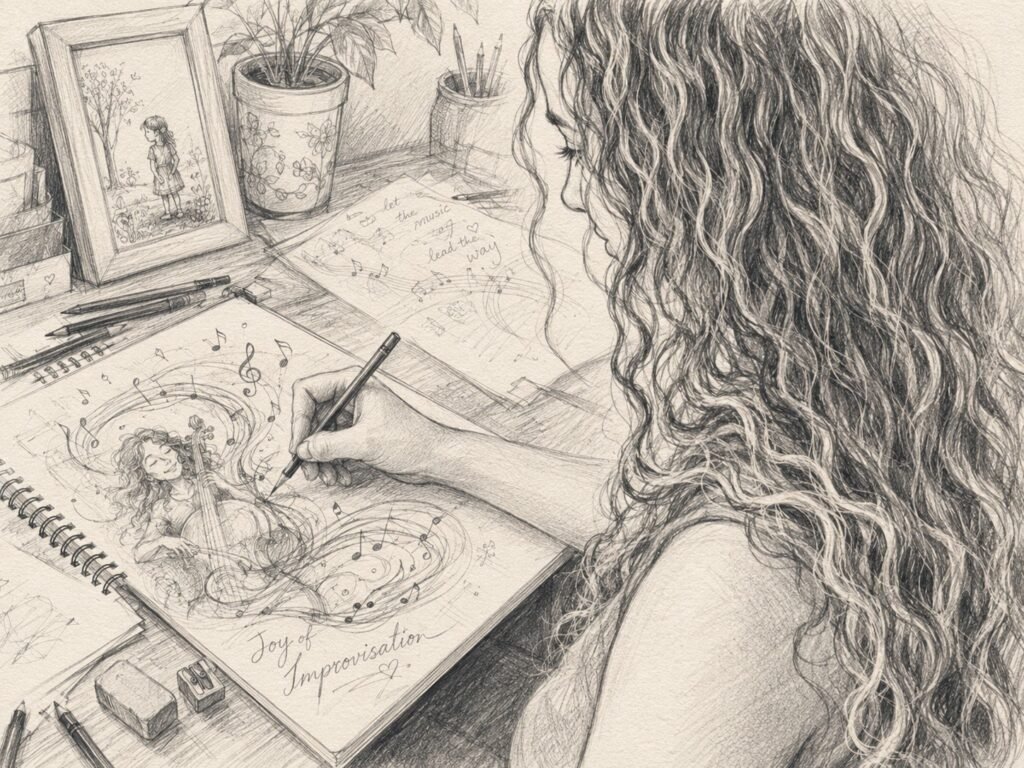
Imagine sitting down with a blank piece of paper, a pencil, or some crayons. You don’t have to know what you’re going to draw. You simply make a line. Then another. Then another. Before long, something begins to emerge a pattern, a shape, maybe even a picture.
Improvising on your cello is much the same.
Instead of a line, you begin with a single note. Then another. Then another. You listen, you respond, you follow your instincts and before long, you’ve created a melody. Maybe even a piece of music.
Music doesn’t always have to come from a page.
It can come from you.
I was classically trained, and I’m grateful for everything that training gave me. But I always felt that something was missing when musicians were taught to play only what was already written.
This page is a place for that. A place to share your improvisations, your ideas, your experiments, and your discoveries. I’ll be sharing some of my own as well.
The goal is not to impress anyone. The goal is to listen closely enough to discover what your cello and your own imagination want to say next.
Play OneNote, any note. It could be high or low, open string, or a fingered note.
It takes time, patience. But be gentle with yourself. It’s going to come.
Don’t worry if it doesn’t sound good at first. When I started improvising on my own like this, my own mother yelled downstairs “when are you gonna play something good “? 😉
Then play another note and another, you may start hearing a direction that you want your improvisation to go into. You may hear a rhythm in your head.
If the blank page feels too blank, choose one simple limitation. Limitations can give creativity something to push against.
Stay on one string and explore how many different moods you can create through rhythm, dynamics, slides, articulation, and silence.
Choose three notes and refuse to add a fourth. Change everything else. Notice how much music can live inside very little material.
Think of a memory, person, place, or feeling. Without using words, let your cello describe what it means to you.
Play a short phrase as if you are asking a question. Pause. Then answer it with another phrase.
Whether you’re just starting your journey or ready to take your playing to the next level,
I’m here to walk alongside you.
Home
About Fred
Blog
Testimonials
Contact us
© 2026 Created with cellopathways